
I love to share these blog posts for free. Most posts include affiliate links to books or products I use and love. If you click on these links and make any type of purchase, I will earn a small commission, and be super stoked that you value the same things I do.
“Smack in the centre of a contradiction is the place to be.” – Bono
“There is a crack in everything, that’s how the light gets in.” – Leonard Cohen
“When you reach for the horizon, as I’ve proven, you may not get there, but what a tremendous build of character and spirit that you lay down. What a foundation you lay down in reaching for those horizons.” – Diana Nyad
“Guess what my favorite part of opening doors is?!” – a little girl I passed in the hallway at the YMCA
Ubuntu: “I Am What I Am Because Of Who We All Are”
In Boyd Varty’s book, The Lion Tracker’s Guide To Life, Boyd tells the story of how he nearly lost a leg to a crocodile attack (you know, it’s like getting a ‘no’ in a container search). Bloodied and in shock at the edge of a shallow river, Boyd was rescued by a Shangaan tracker and friend named Solly Mhlongo. When Boyd asked Solly why he entered the water and risked his life to save him, Solly simply replied, “My brother, you’re in trouble, I’m in trouble!”
The NW2 and Elite trials held on a rather cold and snowy March weekend in Minnesota, while free from actual crocodile attacks, were not without trouble for some competitors and their dogs. As one of the judges for these trials, I took the perspective of Solly, and opened myself up to the struggles – minor and major – that each team experienced as if they were happening to me. I also shared in the joy and relief of a successful find, a successful search, and a day of successful communication between dog and human.
I love being amongst dogs and people who are striving for deeper understanding and more meaningful connection. I love it when these dogs and people can laugh, smile, and not take things too seriously. After all, this life is really wild. If an alien were to descend upon Valley View Middle School during an Elite trial, I like to think the visitor would be mysteriously drawn to the game of searching for target odor, like I’m drawn to watching episodes of Shogun with no subtitles. It makes no sense and perfect sense in a way that delightfully overwhelms the ego.
Ubuntu philosophy says: “I am because we are. A person is a person through other people.” We do these trials – competitors, dogs, volunteers, spouses, friends, officials, judges – together. Yes, I am called judge, but my intent is to observe and understand. And cheer whenever possible. Hell yeah!
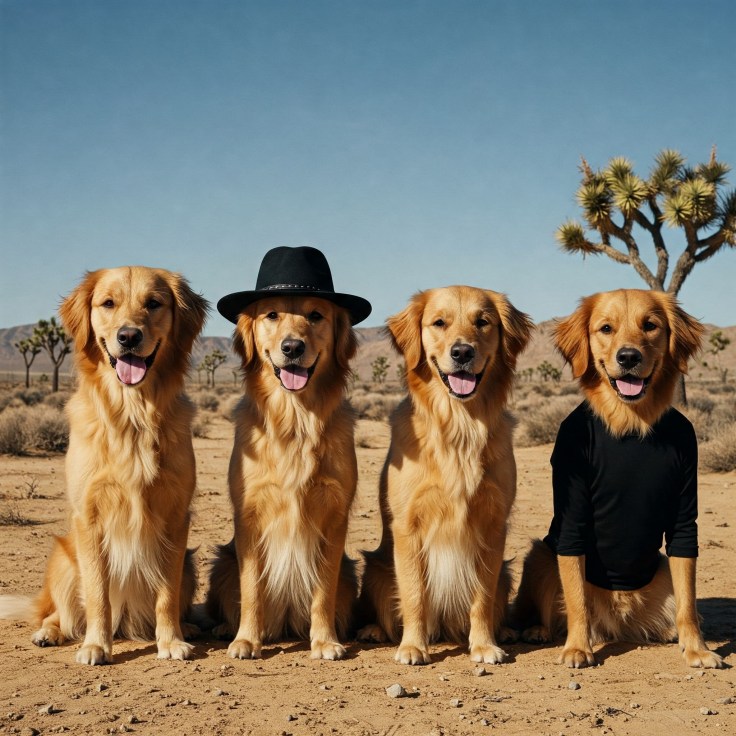
This blog post is heavily influenced by a 2 part interview with U2’s Bono (to promote his new book, Surrender) on the Brené Brown podcast, Unlocking Us. I had a cassette tape of U2’s The Joshua Tree album when I was a kid, and I played it over and over. Bono knows about connecting with others, about listening and understanding, about vulnerability and invincibility. Bono knows how to have fun. He’s a storyteller, an impressionist, a romantic. He’s also a thinker and a doer. I know that Bono would love the hell out of each and every dog and person at the trials I judged. He would recognize the terror and the exhilaration of performing on the stage of the search area, playing the song of scent. He would be your biggest fan.
Let’s take a journey together through a few searches to the centre of contradiction. Lets love the cracks in our teamwork. Let’s celebrate reaching for those horizons. Let’s open some doors and find out what we’re searching for.
In The Weeds And Through The Drains To Source I Cannot Go
After most of the the NW2 trial day spent judging the two interior searches, I got the green light to start judging the exterior search. The sun was still high enough in the sky to shine into the narrow courtyard enclosed on all sides by the inner walls of the school. The wind was light and variable. In the freezing cold you could really feel the air fall into the search area like chilled sake skillfully poured from a crystal clear tokkuri. The area was mostly concrete with a few slightly sunken garden beds and grassy areas to the left and right of the concrete patio. Two areas in the courtyard were marked out of play: a garden bed near the start line occupied by several thorny rose bushes; and a snow-covered patch at the far end of the search area. The objects in this search area included some plastic adirondack chairs, and a wheeled trash can tipped upside down. The NW2 competitors knew that there were 2 hides to find – what they did not know was where. One hide was in the chairs nearer to the start of the search area and one hide was in the trash can handle near the end of the search area. Between the two hides was a 12-15ft long garden bed with shrubs in it.
I stood in a grassy area very close to the door where competitors started their search. Not my favorite position to judge from, but I didn’t want to lounge in the rose bushes, or stand in the snow. Near my feet was a rainwater runoff drain, and 8ft away was the chair hide. Nearer the trash can hide, at the other end of the garden bed, was another drain. No doubt the two were connected. It’s these drains that made this search interesting.
Bono’s father said to him, “I’ve lost my faith. Don’t lose yours, it’s the most interesting thing about you.” We had a crisis of faith for some humans during this search. What I observed with some dogs was a behavior pattern consistent with thinking about how to – and if they even could – advance in the search and find a path to source. This pattern includes behaviors that are soft, low energy, curvy; the nose nuzzles the ground, maybe there’s some munching, some glances at the human, maybe a roll in the snow, or a visit to the judge. What I observed with some humans was a behavior pattern consistent with “losing your shit” – either politely or more panicky, unfortunately, even angrily.
It’s like the human has walked into the search expecting to call two alerts, and instead he gets a mouthful of shame sandwich: If I let my dog munch the grass, or meander in circles like a drunken Etch-A-Sketch stylus and he pees, or times out, or I make a false call, I will feel ashamed for not doing something. If I pull him out of the weeds and shrubs, and the hide really is there, I will feel even more ashamed for doing something. Oof. The shame sandwich. Take a big bite (once in a while I eat the whole sandwich; double oof).
I get it. No one was expecting their dog to step into that cozy courtyard and act like a cow, or make snow angels, or crotch punch the judge. It’s difficult at times to recognize how we feel about a situation and what we need (speaking from personal experience).
As the judge, I observed every search and recognized some patterns {pats own back, accepts award}. Depending on various factors – both environmental, and dog & human related – a dog might begin the search with only the nebulous indirect odor presenting from the drain nearest the start and from some swirls and collections in the shrubs and grasses. All dogs, when faced with a situation that causes them to think about if and how they will advance to source, will communicate using similar behaviors that form a pattern. Four of these behaviors are: circling, staring/gazing (often at the human), nuzzling, and munching. Circling is when the dog repeats circular movements, often with a slow pace and lower energy, sometimes with light/prancing feet and the body held high, sometimes with a low body and nose to the ground. Nuzzling is when the nose presses to the ground (or other surfaces/objects) while the dog is moving at a slow place, with a low body and lower energy. Munching is, well, eating shit/stuff (sometimes literal shit like rabbit or goose poo, sometimes a tiny hunk of objectively inedible treasure).
In response to the behavior of their dogs, I observed various behaviors from humans in this seemingly simple exterior search. Body language from humans included: turning away from the dog and pulling on the leash, walking past the dog and pulling on the leash, going to the dog and grabbing collar or harness, poking the dog (please find another way), stomping the ground by their noses (river dance is not the answer?), pointing out other places in the search area for the dog to put his nose (nose work roulette, bet it all on black chair). Things humans said included: “Quit messing around!” “Get back to work. Find it find it!” “It’s not there.” “Stop eating grass.” “You’re acting so strange.” “I don’t understand what you’re so interested in.”
The situation (complex odor picture) leads the dog to think (expressed through behaviors such as circling and munching), and… the human needs it to stop or change. The human needs his dog to stop thinking or change his thinking. The human doesn’t want his dog to think through how to advance to source.
Bono tells Brené Brown that U2 kept a boxing bag under the stage for when he would “bump into some awful versions of himself on stage”. He would “leave the stage and just go at it.” Bono goes on to say:
“And, you know, it’s like, “What is that?” I would ask myself, “What is it? Who am I fighting with?” And I haven’t fully answered the question. I just spent 560 pages trying to, you know… I failed. But I did know I had to surrender. But who I was fighting, that’s complicated. And I think it probably ultimately comes down to myself, and the different versions of yourself that you might meet out on a stage or in a song.”… Or during a search with your dog.
Remember our little girl from the YMCA who loves opening doors? When your dog displays thinking behaviors, you have the opportunity to open a door to deeper communication with your dog. Many humans are so close to opening this door, so close to surrendering to themselves. So close to facing a situation together with their dogs.
Maybe you think you did open the door to your dog’s deeper communication and all you found was Richard Simmons on acid with his hair on fire and his cheeks packed full of wood mulch, offering you a sweat-drenched head band and a pixie flute made from a unicorn horn.
Maybe you opened the door to your dog’s deeper communication and you just yanked him out of what you thought was a post-apocalyptic hellscape. We’ve all gotta live our truth, I guess.
Imagine if, when your dog began to munch grasses near the judge’s feet, you saw the behavior as a clue, and you recognized the situation: complexity and a need to think through if and how to advance.
Instead of rejecting the behavior – or worse, projecting your confusion, fear, and frustration onto the dog – you listen, and receive your dog’s communication. Magically, if you are together with your dog facing a situation, your dog will often think for only a moment or two, then advance towards source. If your dog doesn’t appear to be advancing, you don’t have to suffer the munching. You can politely restrain the dog from accessing the grasses, and stay tuned into where his nose is guiding your attention and body. Stay tuned to his energy and body language. If you need to, you can pause the search and collect your thoughts, then give yourself a 30-45 second window in which to receive your dog’s communication more completely, and to asses your confidence or lack of confidence in understanding your dog. If fiery Richard Simmons swan diving into a trash volcano is the only vibe you get, you can just be done with the search and happily move on out of the area.
Your primary concern is to convey to your dog that you remain committed to listening and understanding, and you will only intervene to hit the pause button on the dog’s search effort, not to reject his communication or control his focus, but to take a breather and remind yourself: the situation is confusing, not the dog. The dog has the answers, be it answers that lead to source, or answers that lead to more questions – possibly questions that lead to a greater likelihood of not advancing to source.
Is it easier to just control where your dog can put his nose (anywhere you think an official would hide a hide, or anywhere that doesn’t look like a distraction), and be a consistent voice in your dog’s ear to stay on task and “find it”? Sure. I observe people who use their dog like a metal detector, and I observe people who deftly guide their dog like a puppet on a single – very visible – string. At the NW2 level, you can do these things and still find hides and find them fast. Hell, you can even find a bunch of hides in Elite by running your dog around to confirm your guesses of where hides are probably hiding.
In this NW2 exterior search, you could pull your dog out of the weeds and point him at the chairs and call a “hail mary” alert and get a ‘yes’ from the judge. But, rarely will your stories of scent be as interesting and true as your dog’s stories.
This exterior search didn’t have a lot of missed calls or false calls, but it had a lot of missed or miscommunication. A few teams respectfully partnered with their dogs through the complexity, and a few teams had the good fortune of timing such that conditions propelled the dog beyond the confusing start area, right to one of the hides.
A trial search can be like walking a tightrope. You think there’s no margin for error, so you try to quickly shut down any behavior you think might throw you off balance. A trial search could also be like bouncing on a trampoline. You have room to move, and when a force acts on you, you give into it, receive it, and propel yourself onward and upward with confidence and the thrill of adventure. Suddenly, you’re free from the rules of physics, you’re flying, floating, weightless. You know you have a large surface area to land on, so you feel safe and happy. You feel at play. ‘Serious play’, as John Vervaeke calls it.
I sometimes walk a tightrope, when coaching a human or when searching with a dog. But, it’s a tightrope of my own making. I could just as easily bounce and play on a big trampoline. It takes self awareness of what I’m experiencing, and it takes practice. Make it your practice to play on the trampoline. Then, when you find yourself walking the tightrope of trial searches, you’ll remember you and your dog can fly.
Cafe-steer-ia Myster-ia And The Contradiction of Boundaries
I judged two Elite searches at this trial weekend. One was in a large cafeteria with a stage at one end (marked out of play at the top of each short stairway), and the other spanned 3 rooms: a culinary arts classroom, a small kitchen/lounge, and a small part of another classroom. The kitchen/lounge provided the pathway between classrooms.
As in the NW2 the day before, the Elite teams were presented with opportunities to be in partnership and face a complex situation. It sometimes seems like humans at the Elite level load more responsibility onto their own shoulders for managing area coverage, time, and deciding on alert calls with incomplete communication from the dogs. Finding the balance of communication from the dog and action from the human is a never ending process.
Brené Brown asks Bono if U2’s songs intentionally have “room in them for [the listener] to be with different emotions, to be with questions and uncertainty, to move around in?” Bono plays with this question and acknowledges that he and his band mates began to move away from vainglorious noise (but, he says, “who doesn’t love some vainglorious noise?!”) and towards these roomy songs meant to face themselves up to the paradoxes of their own lives. Serious. Bono finishes this deep thought with a quip, “ there’s another way of looking at it, which is: just finish the fucking lyric.” Play.
Serious play. The challenge of fitting a big, roomy, paradoxical search into the box of a timed competition search. No wonder Bono felt the need to punch a bag all these years.
As a judge, I’m not looking for perfection. I’m looking for connection, I’m looking for dog and human to, as Bono says, “let me into their mood.”
One team running the cafeteria search filled the space with a quiet poem of odor intrigue. The human let her dog move her through the space like a twig carried on the current of a gentle creek. She arced and turned, sashayed and strode, and held her breath at the slightest hesitation in her dog’s gait. Everyone present was gifted with the holy grail of partnership. The subtle, yet thrilling confluence of human and dog in conversation, the human speaking the dog’s language in the arena of competition and searching as if no one was watching, as if no time was ticking. This team made room to be in the search. This team let us into their mood.
From Bono: “They don’t put on what we think of as a big show. They just let you into their mood. Which, for those who love them, is the most generous thing they can do.”
The judges, volunteers, hosts, officials and spectators love you and your dogs. Please let us into your mood.
The “vainglorious noise” of the cafeteria search came by way of humans playing the notes of perimeter searching to power slide into 4 of the 6 hides. it can be fun to watch and gives you a little dopamine bump. But, there’s no room in this kind of search. No way to get in. The mood remains out of reach, held at bay by the predictable march from object to object, alert to alert.
The 2 hides that left the door to paradox wide open were both on cafeteria table seats, in a group of four tables arranged between mid room and the stage at the far back of the area.
Humans who wanted to repeat the chorus of perimeter searching around these 4 tables couldn’t quite get the notes to play right. The dogs would have behavior changes that started at the tables and fizzled out at various places on the perimeter. The humans seemed to be in disbelief that a hide could be on one of the tables without being quickly and easily found… “Just finish the fucking lyric!” Might be the decidedly un-playful thought on some humans’ minds.
There was a human who quite respectfully and successfully guided the dog through the search area to find 5 or 6 of the hides. I gave this team a ‘pronounced’. It’s not my preferred genre of searching, but the dog and human seemed to be in agreement throughout the search and they were really flowing.
There were other humans who surrendered to the paradox of the search, who gave their dogs room to be in it. These humans didn’t especially appear to be enjoying the experience. They were not so much letting us into their mood, as they were being distantly present. I could feel the struggle between getting serious (covering area/finding hides) and playing (letting the dog play some interpretative odor jazz on the competition stage). For most humans, playing seemed to be too much a risk.
The second search I judged in this elite trial was a 3 hide search with an area encompassing 3 adjoining rooms. Most every team found all 3 hides. Some teams found all 3 hides very fast. As happens with trial searches, the odor picture came in and out of focus as a function of time and search area disturbance (doors opening and closing, people and dogs moving around). The hide that challenged people the most was on the lower hinge of a door opened against a wall. This door connected the kitchen (middle room) to the classroom (last room). Near this hide was a door in the classroom where teams were exiting the search. Half the classroom was marked “out of play” with soccer dots.
So many humans stopped their dogs from crossing the boundary markers in the classroom. To think that a dog is not able to be efficient on one side of a plastic cone versus the other side is interesting to me. Human after human physically or verbally yanked their dogs back into “the search area” in the classroom. What must it be like for the dogs to have their humans suddenly turn on them for an imaginary line?
Contrast the border battle behavior in the classroom with the crime scene detailing in the culinary arts room (first room). A number of humans suddenly became Kirby vacuum salespeople, selling their dogs on the value of thoroughly searching each kitchenette area. What must it be like for the dogs to have their humans force them to feast on an empty plate?
This search put the spotlight on the contradiction of boundaries. “In play” and “out of play” are only understood by humans. Boundaries give humans more clarity and comfort, but boundaries take humans further away from understanding their dogs. When humans react to boundaries, they do not make sense to their dogs. In one room, the humans stop the dogs from going where the dogs want to go, in another room, the humans entice the dogs to search where they don’t want to go.
In the Unlocking Us interview, Bono talks about his father’s love of music, and his father’s lack of support of his musical aspirations. It doesn’t make sense to Bono. He wonders if his father saw reaching for ones dreams as guaranteed disappointment, and unconsciously tried to steer Bono away from disappointment. Sounds like Bono’s father had ideas of what was “in play” and “out of play” that weren’t shared by Bono. Imagine if Bono’s father had firmly imposed his boundaries on his son. A great musician and activist might never have become. Boundaries – especially those not shared by all parties – trade the realization of dreams for the avoidance of disappointment.
If we take the dog’s perspective in this 3 room elite search, we can learn about the necessity of moving through space. Patterns can emerge that reveal what the dog is experiencing, such as the need to work a collection of scent outside of a search area boundary, or the ability to clear a space without physically searching all of its surface area. When we take the time to listen to the dog, we find that it is our shared understanding through conversation that sets the boundaries.
The Ultimate Paradox: To Be Invincible You Must Be Vulnerable
In the interview, Bono is given a single word and asked what comes to mind, that word is: vulnerability. Bono’s response is, “an invitation to invincibility.” Both trial days for this competition weekend pulsed with the energy of fear, rather than invincibility. Fear of a false call. Fear of time running out. Fear of off-task or unproductive searching. Fear of wasting time outside a boundary. Fear of missing productive areas within a boundary. Fear of a disappointing outcome.
If you can relate to these fears. If you’ve felt them during a trial search. You don’t have to keep going to trials. Take a break. Find a way to experience a search without those fears being present. Find somewhere you can be vulnerable without feeling like you’re risking it all. Accept the invitation to invincibility and really feel what it’s like to search without fear. What it’s like to search beyond disappointment.
During her interview with Bono, Brené Brown reads a passage from his book, “Surrender” , it is about his wife: “Ali is inscrutable, but not unknowable. Ali will let her soul be searched, but only if you reciprocate, and if she’s ready for the long dive.” What Bono describes is true of any deep, authentic, mutually enriching relationship. If you want to experience all that your dog has to offer, you must be vulnerable enough to open your soul up to your dog and yourself.
Surrender
What do you feel when you read that word? Do you feel a tightness in your chest? A tensing of your jaw? Is surrender something you are forced into? Is it defeat? Bono and Brené riff on surrender, calling it a “giving over to” rather than giving up. How could you not want to “give over to” your dog? If you have ever spoken the words, “trust your dog” or “I have the best search partner in the world”, how could you not believe in your dog enough to “give over to” her?
Bono turns over the classic question among the faithful religious, “do you believe in God?”, wondering if the better query might be, “does God believe in you?” I ask you, “does your dog believe in you?” If you surrender to your dog, to the search, what are you giving over to your dog and the search? Why are YOU worthy of your dog’s trust and partnership?
Surrender, be vulnerable, and you will receive “an invitation to invincibility”. The invitation is just the beginning. Giving over to your dog is not a passive, detached, lazy act. It is a radical act. It requires focus and intention. It is a practice. You don’t surrender once and then, poof!, you’re invincible. Every time you partner with your dog you go through the process of surrender, vulnerability, invincibility, like a surfer riding a wave. Sometimes you hook in and just glide with where the wave wants to take you. Other times, you can’t give yourself over to the wave, you fight and resist, and you & the wave crash into each other. Every time, you must paddle back out to the wave and practice the energetic shift from surrender, to vulnerability, into invincibility.
When you find your way into a big, roomy search, when you and your dog hook into a wave of odor, and invite us all into your mood, when you’re out there at the edge of vulnerability, searching for invincibility, remember, you’re searching for so much more than odor. You’re giving over to your dog, and searching for yourself.
Happy Sniffing!
 Sniff This Blog
Leave a comment